Empowering Rural Girls Through Education Awareness and Fundraising Ideas
A girl’s schoolbag can carry far more than books. In many rural communities, it carries hope for better health, later marriage, safer choices, higher income, and a stronger voice at home and in the village.
Yet for many little girls in rural areas, education is still not a straight path. It is a path broken by distance, household work, lack of money, unsafe travel, poor school facilities, and social beliefs that question whether girls need schooling at all. An awareness drive paired with thoughtful fundraising can change that path, one child, one family, and one village at a time.
Education for girls is not charity. It is a long-term investment in families and communities. When a girl stays in school, she gains literacy, confidence, problem-solving skills, and access to opportunities that can reshape her future.

Why girls’ education changes rural communities
A girl who learns to read can read a bus board, a medicine label, a bank form, a message from a teacher, and a notice about government schemes. A girl who completes school is more likely to understand her rights, make informed health decisions, and take part in local life.
The benefits do not stop with one student. Girls who receive education often support younger siblings, help parents manage paperwork, and encourage neighbours to send their children to school. Over time, this creates a culture where education becomes normal for daughters, not only sons.
Girls’ education supports:
Better literacy in families
Improved confidence and decision-making
Lower risk of child marriage
Better awareness of health and hygiene
Higher chances of skilled work or further study
Stronger participation in community life
In rural India, many families value education deeply but face hard choices. If money is short, school expenses may seem less urgent than food, farming needs, medical costs, or debt repayment. A girl may be bright and eager, but still be kept home because her family cannot afford uniforms, notebooks, transport, exam fees, or a bicycle.
That is where awareness and fundraising must work together. Awareness helps families see the value of keeping girls in school. Fundraising removes the practical barriers that stand in the way.
The challenges rural girls face before they reach the classroom
For many girls, the struggle begins long before the first bell rings.
Distance and safety affect attendance
Some children walk several kilometres to school. During monsoon, the route may become muddy or unsafe. In some areas, older girls drop out when the nearest secondary school is too far away. Parents may worry about harassment or road safety, especially if girls travel alone.
A simple bicycle support programme, a shared transport fund, or safe walking groups can make attendance more regular.
Household responsibilities fall heavily on girls
Many girls wake early to fetch water, care for younger siblings, help with cooking, or support farm work. If a parent is unwell or working long hours, a daughter may become the default caregiver at home.
Awareness drives need to speak gently but clearly about this issue. Families need support, not blame. When communities discuss shared childcare, flexible study time, and equal household duties, girls get more time to learn.
School costs add up quickly
Government schooling may be low-cost, but education is rarely free in practice. Families still pay for:
Uniforms and shoes
Notebooks, pens, bags, and geometry boxes
Transport or bicycle repairs
Exam forms and certificates
Extra tuition where needed
Menstrual hygiene products
A fundraiser that covers these “small” costs can prevent dropouts. For a low-income family, a few hundred rupees at the wrong time can decide whether a girl continues or stays home.
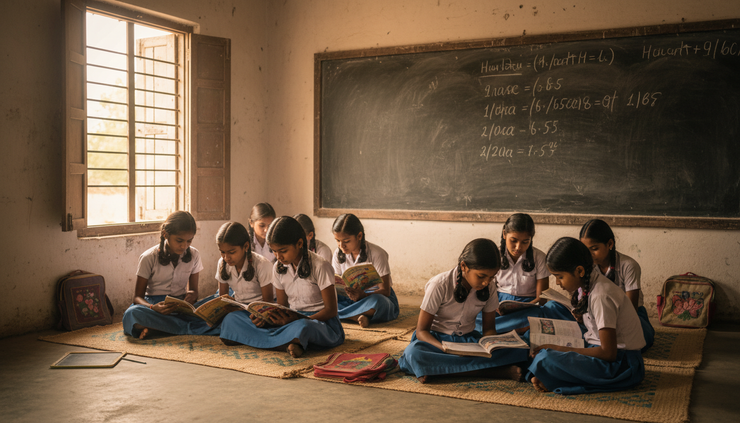
Stories that show what support can do
The following stories are illustrative, with names changed, but they reflect common experiences seen in many rural education efforts.
Meena found her way back to school
Meena loved maths, but she missed school often because she had to care for her younger brother while her parents worked as daily wage labourers. Her teacher noticed the absences and spoke with a local education volunteer.
The volunteer visited Meena’s home, not to criticise the family, but to understand the problem. A women’s self-help group in the village arranged a rotating childcare system during school hours. A small education fund covered Meena’s notebooks and uniform.
Within months, Meena’s attendance improved. She began helping two younger girls with sums after class. What changed her life was not one grand donation. It was a web of practical support: a teacher who noticed, a volunteer who listened, and a community that shared responsibility.
Farida’s bicycle changed her routine
Farida completed primary school in her village, but the nearest middle school was several kilometres away. Her parents were unsure about sending her. The walk was long, and they worried about safety.
An awareness drive in the village brought parents, teachers, and local leaders together. Several families agreed that girls would travel in groups. A fundraiser paid for bicycles and basic repair kits for students who lived far from school.
Farida began cycling with four other girls every morning. The bicycle gave her more than transport. It gave her time, safety in numbers, and a sense of independence. Her younger sister now speaks of school as a normal part of growing up.
Kavya learned to speak in front of others
Kavya was shy and rarely answered questions in class. A local education initiative began a weekend learning circle where girls read stories, practised public speaking, and learned basic digital skills using shared devices.
At first, Kavya only listened. Later, she read a paragraph aloud. By the end of the year, she spoke at a village meeting about why girls need clean toilets in school.
Her confidence did not appear overnight. It grew because someone created a safe space for practice. Education initiatives do more than teach subjects. They help girls believe their voice has value.
Fundraising ideas that turn concern into action
The best fundraising efforts are transparent, local, and tied to clear goals. People give more confidently when they know what their contribution will support.
Community events bring people together
Village-level events can raise funds and spread the message at the same time. Keep them simple, low-cost, and inclusive.
Ideas that work well include:
A charity meal prepared by local volunteers
A school mela with games, student performances, and book stalls
A sports day where teams raise entry contributions
A cultural evening with folk songs, street plays, or poetry
A “sponsor a school kit” drive during festivals
A street play on girls’ education can spark discussion. A student art display can show what girls dream of becoming. A small donation box at a community event can fund notebooks, uniforms, or sanitary pads.
To build trust, display the goal clearly. For example, “This event will fund school bags for 50 girls” or “This collection will repair the girls’ toilet block.”
Online campaigns can reach supporters beyond the village
Online fundraising helps relatives, former residents, alumni, and well-wishers contribute from other cities. A simple campaign can share the need, target amount, use of funds, and updates.
A good online campaign includes:
A clear story with consent and privacy
Photos of school materials, classrooms, or community activities
A specific goal, such as bicycles, books, or tuition support
Regular updates on funds received and items purchased
Receipts, where possible
A short thank-you message from the school or organising group
Avoid using a child’s full name, address, or sensitive personal details. Protect dignity. The purpose is to support education, not to display hardship.
Partnerships with local businesses can create steady support
Local businesses can play a powerful role. A shopkeeper may sponsor notebooks. A flour mill owner may support transport for one month. A tailoring unit may stitch uniforms at reduced cost. A mobile repair shop may help maintain shared learning devices.
Small, steady partnerships often work better than one-time giving. Local businesses can support in different ways:
Fundraising partner | Useful contribution | Possible impact |
Kirana stores | Donation box or monthly school kit support | Regular local giving |
Tailors | Low-cost uniforms or stitching support | Lower school expenses |
Cycle repair shops | Free or discounted repairs | Safer school travel |
Pharmacies | Menstrual hygiene kits | Better attendance and dignity |
Local transport owners | Reduced fares for students | Easier school access |
Partnerships should be public, simple, and accountable. A wall notice or monthly update can show how support was used.
Sponsorship funds can support girls at risk of dropping out
Some girls need focused help for a year or more. A sponsorship fund can cover school supplies, transport, exam fees, after-school support, or digital learning access.
This model needs careful management. Create fair selection rules with teachers and community members. Keep records. Review progress without placing pressure on the child. The aim is support, not public comparison.
Skill and time donations matter too
Not every contribution needs to be money. Volunteers can offer:
Reading support for younger children
Maths practice before exams
Career talks for older girls
Help filling scholarship forms
Library management
Mentoring for first-generation learners
A retired teacher, college student, anganwadi worker, or local youth volunteer can make a deep difference with just a few hours a week.
How to plan a transparent education fundraiser
A fundraiser should inspire trust from the start. Clear planning prevents confusion later.
Use this simple framework:
Identify the need
Speak with teachers, families, and students. Choose one clear issue, such as school kits, bicycles, toilet repair, or exam fee support.
Set a realistic target
Estimate costs in rupees. Include transport, purchase, repair, and follow-up costs if needed.
Create a local committee
Include teachers, parents, women’s group members, youth volunteers, and a respected community representative.
Keep records
Track every contribution and expense. Use receipts where possible.
Share updates
Inform donors and families about what was bought, who received support, and what changed.
Measure progress
Look at attendance, exam participation, re-enrolment, or the number of girls receiving supplies.
Transparency is not only about money. It is about respect. When donors, families, and students see honest communication, they stay involved.
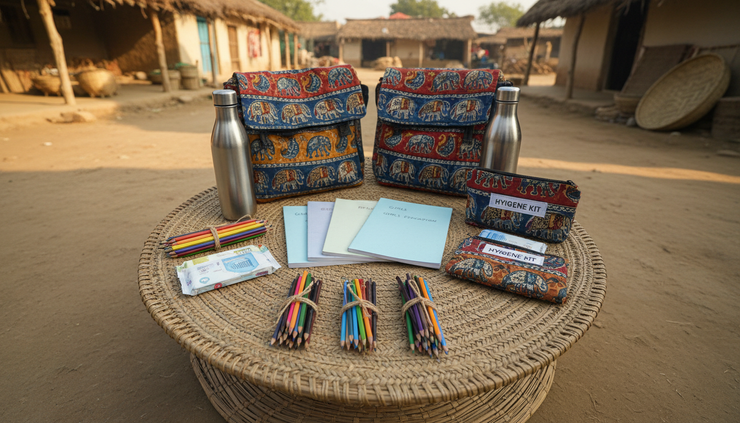
Ways to get involved today
Change grows when many people take one useful step each. A person can support girls’ education even without starting a large campaign.
Here are meaningful ways to contribute:
Donate school supplies before the academic year begins
Sponsor transport support for girls who live far from school
Organise a book collection in good condition
Volunteer for weekend reading or maths sessions
Help families understand scholarship forms
Support menstrual hygiene awareness in schools
Encourage local businesses to adopt one education need
Share verified fundraising campaigns with friends and family
Invite teachers to speak at village events
Celebrate girls who continue school after Class 5, Class 8, and Class 10
The most powerful support is often consistent. A girl may need help in June for admission, in August for uniform replacement, in December for exam preparation, and in March for the next year’s planning. Education support works best when it follows the school calendar.
A village that educates girls builds its own future
Every rural girl deserves the chance to sit in a classroom, ask questions, make friends, read freely, and imagine a future beyond limits set by poverty or custom. Awareness helps families believe in that future. Fundraising helps pay for the bridge that gets her there.
Start small if needed. Gather five neighbours. Speak to one teacher. Fund ten school kits. Repair one toilet door. Help one girl return to class. Then build from there.
When a community stands behind its daughters, the result is not only better schooling. It is a stronger, wiser, and more hopeful future for everyone.


Comments